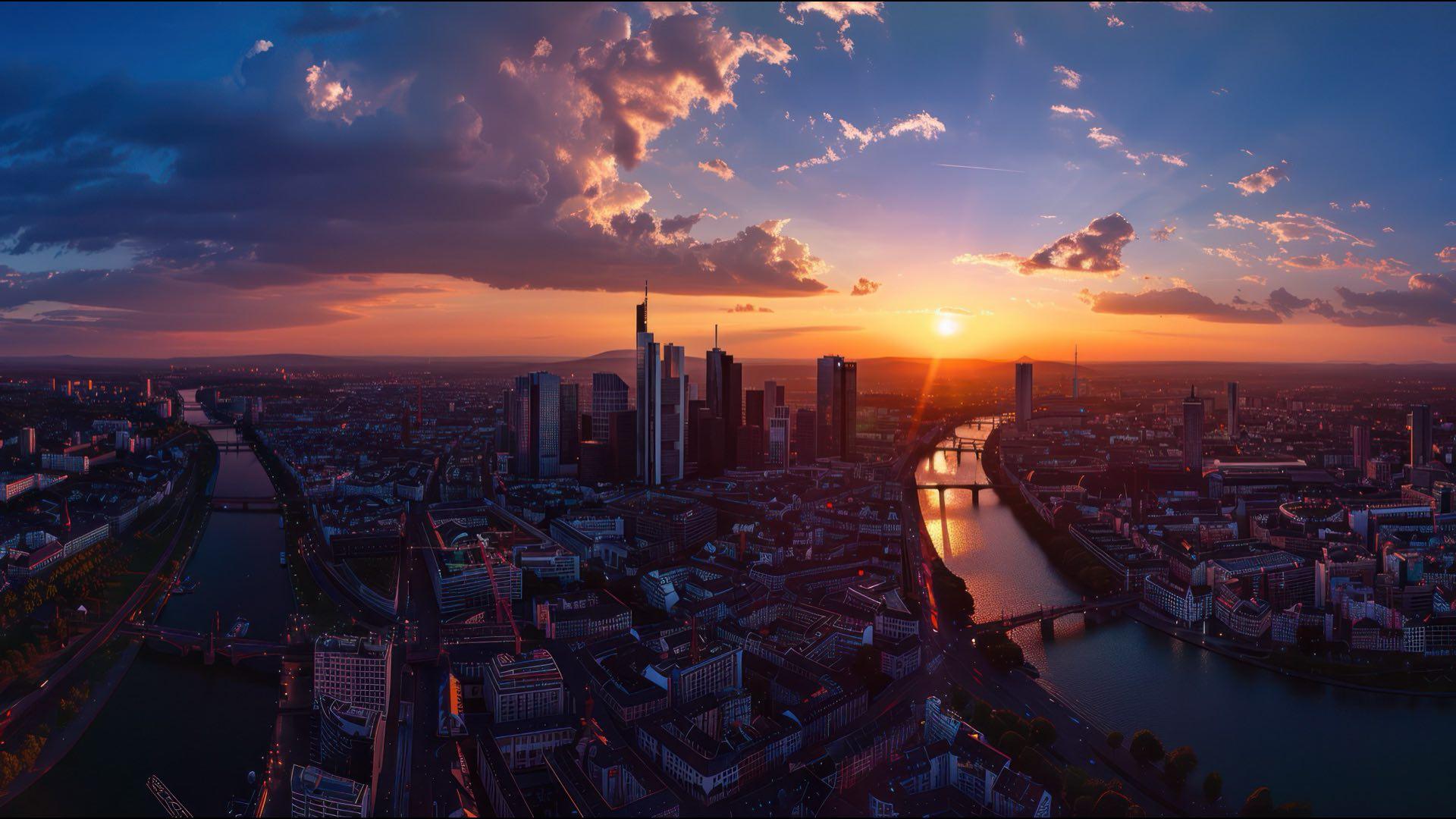

Frankfurt
Frankfurt is continental Europe's financial capital and home to the European Central Bank, Deutsche Bank, Commerzbank, and the post-Brexit beneficiaries of London's banking exodus (JPMorgan, Goldman Sachs, Morgan Stanley have all expanded EU operations here). Property prices reflect this concentrated wealth: city-centre residential runs EUR 6,500-12,500 per square metre with rental yields of 3.0-3.8% gross. Frankfurt punches well above its 770,000-resident population thanks to a daily commuter influx of more than 350,000 financial professionals. This drives premium rental demand in city-centre apartments and prime suburban houses in Westend, Sachsenhausen, and Nordend. The city's skyline -- the only true skyscraper cluster in continental Europe -- gives it an Americanised feel that institutional capital finds reassuring. For international buyers, Frankfurt offers ECB-grade liquidity, an English-speaking professional environment, deep transport links via Frankfurt Hauptbahnhof and FRA airport (Europe's 3rd-busiest), and consistent demand from financial services tenants who pay above-market rents. Risk: high concentration in financial sector cycles.
On INTRIC now — Residences in Germany are open to enquiry straight from this page.

Weiler C 7, Dranske
HOUSE · Weiler C 7, 18556, Dranske, Germany
From EUR 225K

Villa Tannenberg
CONDOMINIUM · Tannenbergallee, 14055 Berlin (Charlottenburg / Grunewald), Germany
EUR 3.08M – EUR 6.98M

Rehmkoppel 26, Hamburg
HOUSE · Rehmkoppel 26, 22391, Hamburg, Germany
From EUR 359K

Villa Augusta
CONDOMINIUM · Augustastrasse 23c, 12203 Berlin (Lichterfelde-West), Germany
EUR 1.35M – EUR 2.00M

Weiler C 7, Dranske (386557)
HOUSE · Weiler C 7, 18556, Dranske, Germany
From EUR 225K

Sierichstraße 108a, Hamburg
HOUSE · Sierichstraße 108a, 22299, Hamburg, Germany
From EUR 649K

Koppelweg 14, Kakenstorf (385288)
LAND · Koppelweg 14, 21255, Kakenstorf, Germany
From EUR 149K

Koppelweg 14, Kakenstorf
HOUSE · Koppelweg 14, 21255, Kakenstorf, Germany
From EUR 298K
Figures are indicative and subject to change. Regulations, taxes and market conditions vary by jurisdiction. Do your own due diligence and seek independent legal and financial advice.
More in Germany
All city guides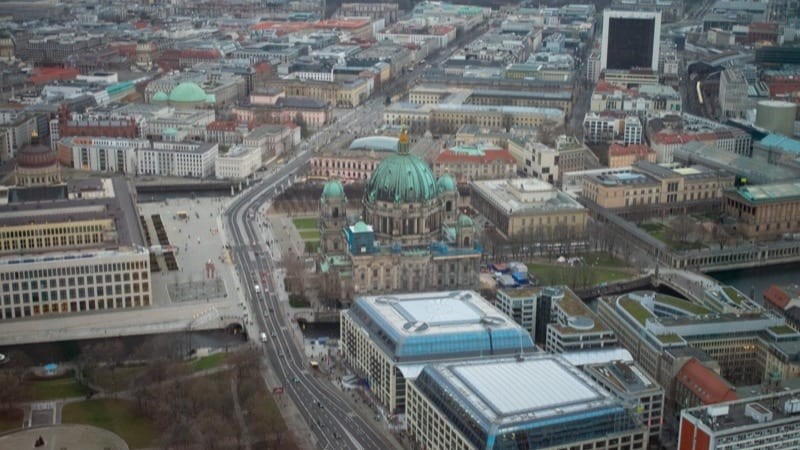
Berlin
City guide
Berlin is Europe's capital of creativity and one of its most resilient property markets. Germany's largest city by population (~3.8 million) and the political heart of the EU's largest economy, Berlin has transformed over three decades from a divided post-Cold War curiosity into a global hub for startups, art, music and progressive urbanism. The property market is anchored by strong tenant protections, a chronic supply shortfall, and rising rents that consistently outpace national averages. Average prices in central districts run EUR 5,500-9,500 per square metre, with rental yields of 3.2-4.5% gross. The 2025 federal coalition's housing legislation extending Mietpreisbremse rent controls through 2029 keeps yield compression real -- but the structural undersupply (Berlin needs ~20,000 new units per year and consistently builds half that) keeps capital values trending up. For international investors, Berlin offers EU-grade legal certainty, deep liquidity, English-speaking professional services, and a market that proved its defensive credentials during the 2022-24 rate cycle. The catch: yields are thin and tenant law tilts heavily toward the tenant. Best suited to long-term capital preservation buyers rather than yield hunters.
Average priceEUR 5,500-9,500 (USD 5,900-10,200)Rental yield3.2-4.5% gross (city average 3.7%)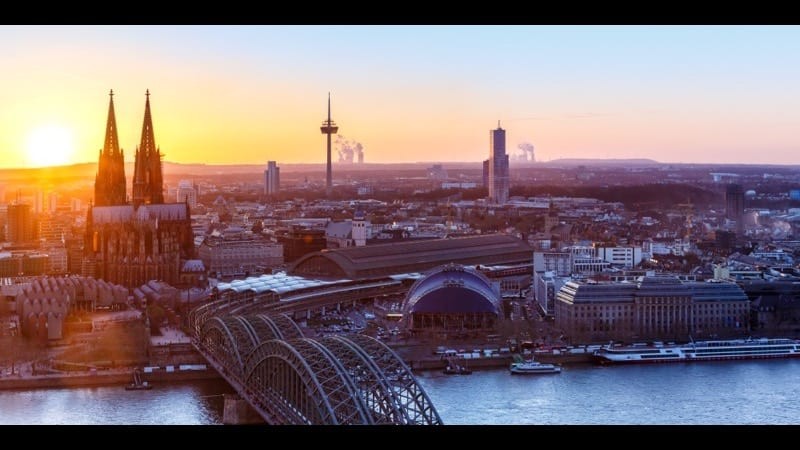
Cologne City Guide
City guide
North Rhine-Westphalia's largest city and the cultural and media heart of the Rhineland, Cologne offers international investors a deep, liquid residential market within Germany's most populous metropolitan region, Rhine-Ruhr. The city's economy blends media and broadcasting, insurance, logistics and a major trade-fair complex, supporting steady, broad-based rental demand. Prime values concentrate in leafy Lindenthal and the central Innenstadt and Neustadt, where existing apartments trade around €4,200–€4,330 per square metre and new-build stock reaches roughly €7,310 per square metre; mid-market gentrifiers Ehrenfeld and Nippes, among the German neighbourhoods forecast to see the strongest 2026 price growth, combine accessibility with appreciation potential. Cologne's market-active vacancy rate sits between 0.5% and 1.2%, with near-zero effective vacancy in high-demand quarters such as Ehrenfeld and Neustadt. Rents remain anchored by the official Mietspiegel, keeping gross yields modest at roughly 3.0% citywide (a 2.3–4.2% spread driven primarily by location). With prices up about 5% year-on-year as the market recovers from the 2022–2023 correction, mortgage rates stabilising, and a base-case five-year cumulative growth estimate near 20%, Cologne enters 2026 as a steady, income-and-growth core market for buyers prioritising liquidity and tenant depth.
Average price€360,000Rental yield3.0%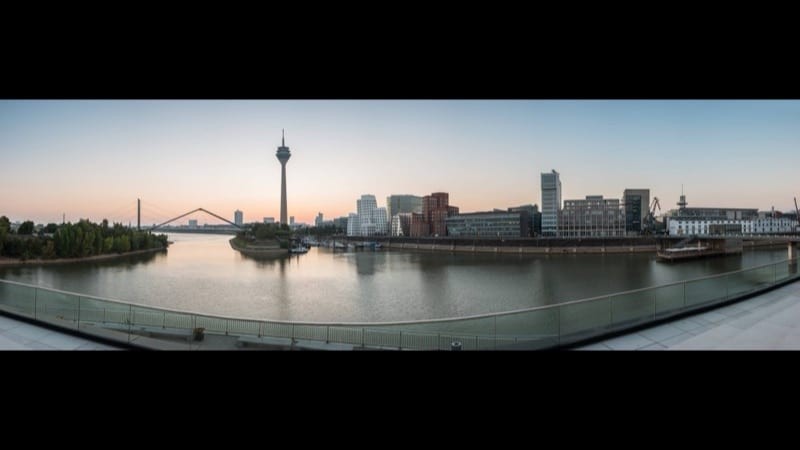
Düsseldorf City Guide
City guide
The capital of North Rhine-Westphalia and one of Germany's wealthiest cities, Düsseldorf is a finance, fashion, advertising and telecommunications centre with a notable Japanese business community and a prestige address book that rivals any in the country. The riverfront Oberkassel quarter on the Rhine's left bank commands the city's highest values, often above €6,600 per square metre, while prime central districts such as Carlstadt, Pempelfort, Derendorf, Golzheim and Unterbilk combine cosmopolitan lifestyle with persistently low vacancy. Citywide, the median price sits around €4,300 per square metre and the average near €4,470, with the market regaining momentum after the 2022–2023 correction. Rents are climbing a steady 3–4% per year against very low vacancy, producing gross yields of roughly 2.9–4% (a price-to-rent ratio of 25–35). Infrastructure-led demand is concentrating in the northern airport corridor near Freiligrathplatz and the left-bank neighbourhoods of Lörick and Heerdt. With well-located, energy-efficient apartments projected to deliver 35–50% five-year total returns and a deep base of corporate and international tenants, Düsseldorf enters 2026 as a prime, stable core market favouring capital preservation and reliable income over speculative growth.
Average price€430,000Rental yield3.4%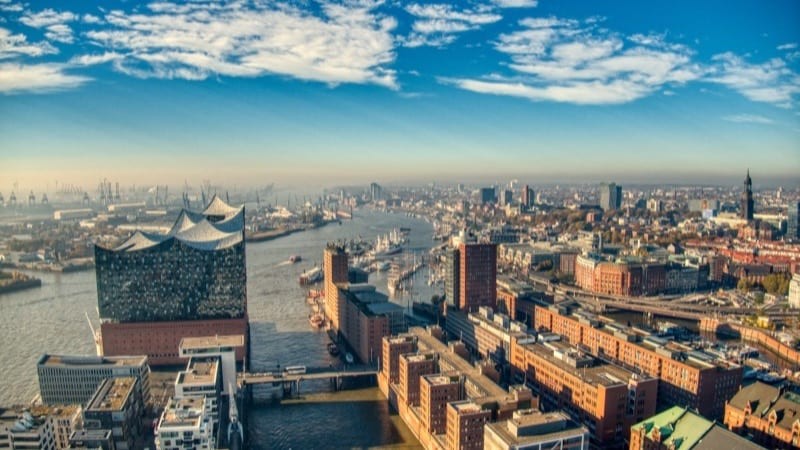
Hamburg City Guide
City guide
Germany's second-largest city and its richest by GDP per capita, Hamburg pairs the commercial heft of Europe's third-busiest container port with one of the country's most resilient residential markets. From the canal-laced affluence of Harvestehude and Rotherbaum, through the waterfront regeneration of HafenCity, the largest inner-city development project in Europe, to the gentrifying creative quarters of Eimsbüttel, Winterhude and Altona, the city offers international buyers a stable, transparent market underpinned by structural undersupply. Hamburg's vacancy rate sits at roughly 0.5%, among the lowest in Germany, while the metropolitan region is expected to surpass two million residents by 2030, sustaining a chronic gap between household formation and new-build completions. New-contract rents are rising an estimated 3–5% year-on-year, and major infrastructure, the U5 metro line and the Science City Bahrenfeld research cluster, is reshaping demand corridors in the city's west and north. With prices recovering modestly after the 2023 correction and a deep, diversified economy spanning media, logistics, aerospace (Airbus) and renewable energy, Hamburg enters 2026 as a core-stable hold for income-focused investors who prioritise capital preservation and near-zero void risk over speculative upside.
Average price€760,000Rental yield3.0%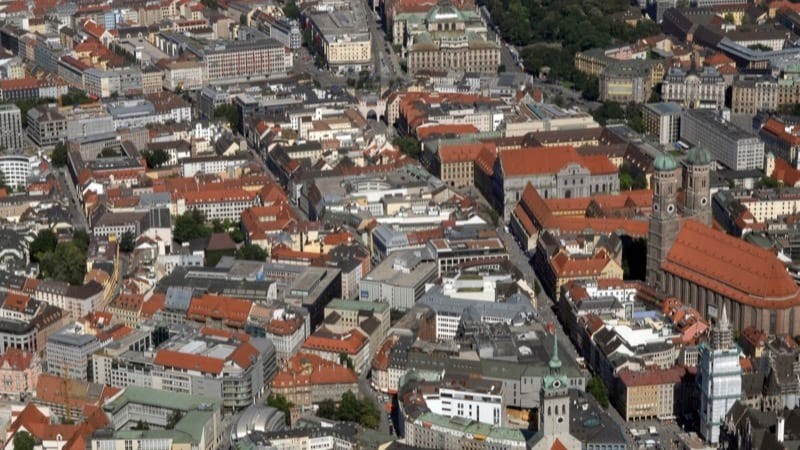
Munich
City guide
Munich is Germany's most expensive city and its strongest property market on a fundamentals basis. The Bavarian capital combines blue-chip corporate employers (BMW, Siemens, Allianz, MunichRe), Germany's lowest unemployment, and a constrained land supply hemmed in by Alpine geography. The result is a market where average residential prices have nearly tripled since 2010 and gross yields have compressed below 3% in central districts. Prices in core neighborhoods like Altstadt-Lehel, Maxvorstadt and Schwabing range from EUR 9,500 to EUR 18,000 per square metre. Outer ring districts offer EUR 6,500-9,000 per sqm. Rental yields run 2.8-3.5% gross -- the lowest in Germany -- but with the strongest rental demand and the most defensive tenant base (professionals on Bavarian salaries are roughly 20% above the German average). For international buyers, Munich is a pure capital-preservation play with currency-hedged Eurozone safety and an A+ tenant pool. Yield-focused investors should look elsewhere; long-term wealth-protection buyers consistently rank Munich as a top-3 European destination alongside Zurich and Geneva.
Average priceEUR 9,500-18,000 (USD 10,200-19,300)Rental yield2.8-3.5% gross (city average 3.1%)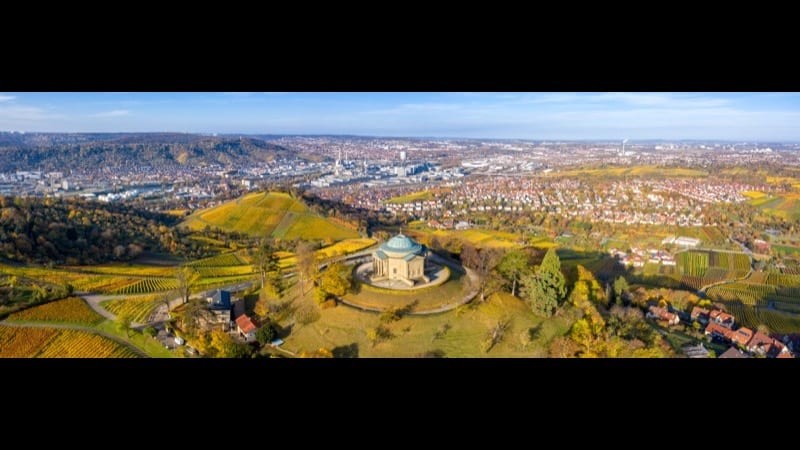
Stuttgart City Guide
City guide
The capital of prosperous Baden-Württemberg and the engineering heart of Germany, Stuttgart is home to Mercedes-Benz, Porsche, Bosch and a dense Mittelstand of advanced-manufacturing and automotive-technology firms, an economic base that drives some of the highest household incomes and most resilient rental demand in the country. For yield-focused investors, Stuttgart is unusual among Germany's top cities: gross rental yields of roughly 4.5–5%, and a monitored submarket reading as high as 4.67%, sit well above the national average near 3.6%, reflecting compact, well-connected apartments in a topographically constrained city where the valley basin limits new supply. Demand concentrates in central districts and the affluent half-timbered hill quarters, while the transformational €11 billion Stuttgart 21 rail project, due to open in December 2026, is set to free up vast inner-city land and is among the top three German infrastructure projects expected to lift property values, with transit-proximate premiums historically running 5–15%. Within the broader German base case of 15–25% cumulative five-year growth, Stuttgart's combination of above-average yields, scarce land, a high-wage export economy and a generational infrastructure catalyst positions it as one of the country's most compelling income-and-catalyst markets for 2026.
Average price€430,000Rental yield4.6%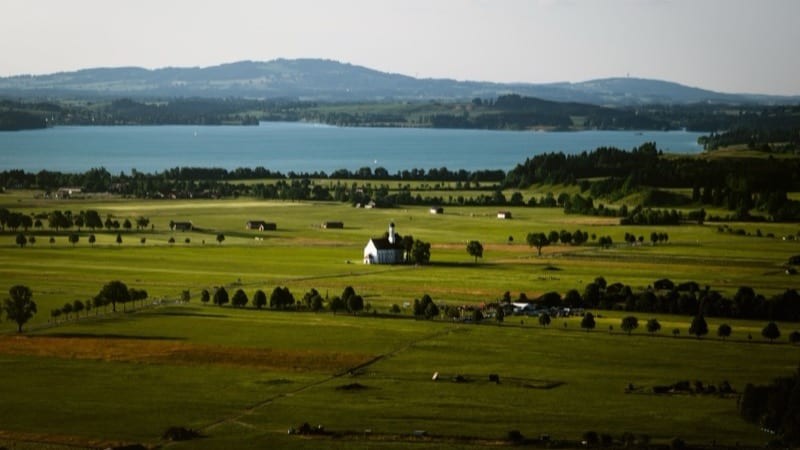
Germany country guide
Country guide